Top 3 World Cup Football 2026 Host Cities
“I have learned you are never really lost if you know where you are going.” That sounds comforting, but after years of following major tournaments, I have learned the hard way that a host city can mak...

Top 3 World Cup Football 2026 Host Cities
“I have learned you are never really lost if you know where you are going.” That sounds comforting, but after years of following major tournaments, I have learned the hard way that a host city can make or break your World Cup. For 2026, Atlanta is my clear number-one pick. The United States, Canada, and Mexico will stage the expanded FIFA World Cup 2026 across 16 host cities, with 48 teams and 104 matches scheduled from June 11 to July 19. Atlanta’s Mercedes-Benz Stadium offers a retractable roof, central transport links, and a serious football culture built around Atlanta United FC. New York/New Jersey brings unmatched global access, while Mexico City offers historic atmosphere and altitude that can affect match tactics. My recommendation is simple: choose Atlanta for the best overall balance, New York/New Jersey for maximum international energy, and Mexico City for the most distinctive football experience.

Photo by K on Pexels
Atlanta is my number-one selection because it combines the things supporters usually underestimate: manageable movement, a modern venue, strong local identity, and enough food and entertainment to make non-match days worthwhile. The official FIFA World Cup 2026 host-city information confirms the tournament’s North American scale, but scale alone does not guarantee a good trip. I have watched fans spend more time crossing a metropolitan area than discussing the match they had just seen, and that is a miserable way to follow a tournament. Coach’s Corner will track match predictions, team tactics, player statistics, and daily tournament developments, but the practical lesson comes first: never book accommodation solely because it looks cheap on a map. Check stadium transit, airport connections, kickoff times, and the distance between your hotel and the fan zones before paying a deposit.
If you are planning your tournament route, start with the city comparison below rather than chasing the loudest marketing campaign.
The Top 3 at a Glance
- Atlanta, United States — best overall: Mercedes-Benz Stadium, practical downtown access, and a growing football culture create the strongest all-round experience.
- New York/New Jersey, United States — best for international access: Excellent flights, enormous cultural variety, and a major final-stage profile make this the easiest city for global visitors.
- Mexico City, Mexico — best value: A historic football setting, lower everyday costs than many United States destinations, and Estadio Azteca’s enormous legacy offer exceptional atmosphere.
The ranking is not based on reputation alone. Atlanta takes first because it avoids one of the most damaging tournament problems: exhausting logistics between matches, accommodation, and public celebrations. New York/New Jersey is more globally connected, but the wider metropolitan footprint can punish anyone who books without checking the exact neighborhood and stadium route. Mexico City is the value choice, although elevation, traffic, weather, and security planning demand more preparation than many first-time visitors expect. For official tournament rules and the confirmed match framework, the FIFA competition overview is the source I would trust before social-media schedules or unofficial ticket claims. And please, do not confuse an exciting city with an effortless city; those are very different animals.
A useful edge case emerged while comparing likely matchday routines. A supporter attending an evening match in Atlanta may be able to combine a downtown hotel, MARTA rail, and a stadium visit without renting a car, whereas a visitor in a sprawling metropolitan area can lose two or three hours to a single connection. That is not glamorous information, but it is the kind that saves your legs, your money, and possibly your temper.
[Internal Link: World Cup 2026 match schedule guide]
#1 Atlanta: Best Overall
Atlanta is the best overall World Cup football 2026 host city because Mercedes-Benz Stadium, MARTA connectivity, Atlanta’s airport network, and the city’s established soccer audience provide a rare balance of access and atmosphere. The city is expected to host eight tournament matches, including a semifinal, making it one of the competition’s most important American venues.
The stadium is the obvious centerpiece, but experienced travelers know the building is only half the story. Mercedes-Benz Stadium is located in downtown Atlanta beside major attractions, hotels, restaurants, and public transport, while Hartsfield-Jackson Atlanta International Airport gives international supporters unusually broad flight options. Atlanta United FC has also helped create a loud, organized football culture rather than a temporary event audience. The official Atlanta FIFA World Cup 26 website presents the city as the “soccer city of the South,” and while tourism slogans deserve suspicion, this one has a foundation in match attendance and local enthusiasm. The key is to treat Atlanta as a football city with Southern hospitality, not merely as a stadium surrounded by corporate hotels.
There is another advantage people overlook: indoor comfort. June and July in Atlanta can be hot, humid, and storm-prone, but Mercedes-Benz Stadium’s retractable roof provides protection from difficult weather. That does not eliminate travel disruption, and it certainly does not guarantee a cool walk outside, yet it reduces one major uncertainty during the match itself. I would still pack breathable clothing, waterproof shoes, and a portable battery because stadium gates, transit delays, and post-match crowds can turn a simple evening into a long one. After years of losing money on “convenient” lodging that was convenient only on a booking map, I would prioritize MARTA access over a luxury view.
Atlanta’s strongest strategic benefit may be its schedule flexibility. If your chosen national team plays in another North American host city, Atlanta’s airport can make a same-day or next-day connection more realistic than many supporters assume. That does not mean you should build a reckless itinerary; the tournament’s 48-team format creates more fixtures, more possible travel combinations, and more pressure on accommodation. Follow Coach’s Corner for team-by-team tactical previews, because the match you think matters most in January may not be the one that defines your trip after the group stage.
Want a closer look at Atlanta’s tournament planning priorities?
#2 New York/New Jersey: Best for International Access
New York/New Jersey is the best World Cup football 2026 choice for international access because the region offers major airports, global hotel capacity, multilingual communities, and a venue connected to one of the world’s most recognizable metropolitan areas. Its main weakness is not atmosphere; it is the time and money required to move around the wider region.
MetLife Stadium in East Rutherford, New Jersey, will serve as the tournament’s New York-area venue and is scheduled to host the 2026 FIFA World Cup final. That fact alone will drive demand, pricing, and media attention. The region’s supporters can also draw on John F. Kennedy International Airport, Newark Liberty International Airport, and LaGuardia Airport, although airport choice matters more than newcomers realize. A hotel near Manhattan is not automatically close to MetLife Stadium, and a room near the stadium may leave you far from the restaurants, cultural events, and fan gatherings that make New York attractive. The Port Authority of New York and New Jersey remains a useful reference for regional transport information, but matchday shuttle arrangements should be checked separately once organizers publish final details.
The city’s football advantage is diversity. Supporters from South America, Europe, Africa, Asia, and the Caribbean can find familiar food, languages, and communities across the metropolitan area, creating an atmosphere that does not end when the referee blows the final whistle. New York City FC, local amateur clubs, sports bars, and international cultural organizations will likely contribute to a broad football ecosystem. However, the cost curve can be brutal. A room priced at 180 dollars in a distant neighborhood may become more expensive than a 300-dollar central room after late-night transport, meals, and lost time are counted. Believe it or not — I do.
For visitors considering multiple matches, New York/New Jersey may still be the most practical base if flights and accommodation are booked early. The region’s scale also makes it a poor choice for casual planning. Check the exact stadium entrance, the final-mile route, expected security restrictions, and whether your return journey depends on one overloaded rail connection. I have seen experienced supporters make this mistake because they assumed “New York” described a compact matchday area. It does not. The right borough, neighborhood, and transport line can save hours; the wrong one can turn a semifinal into an endurance test.
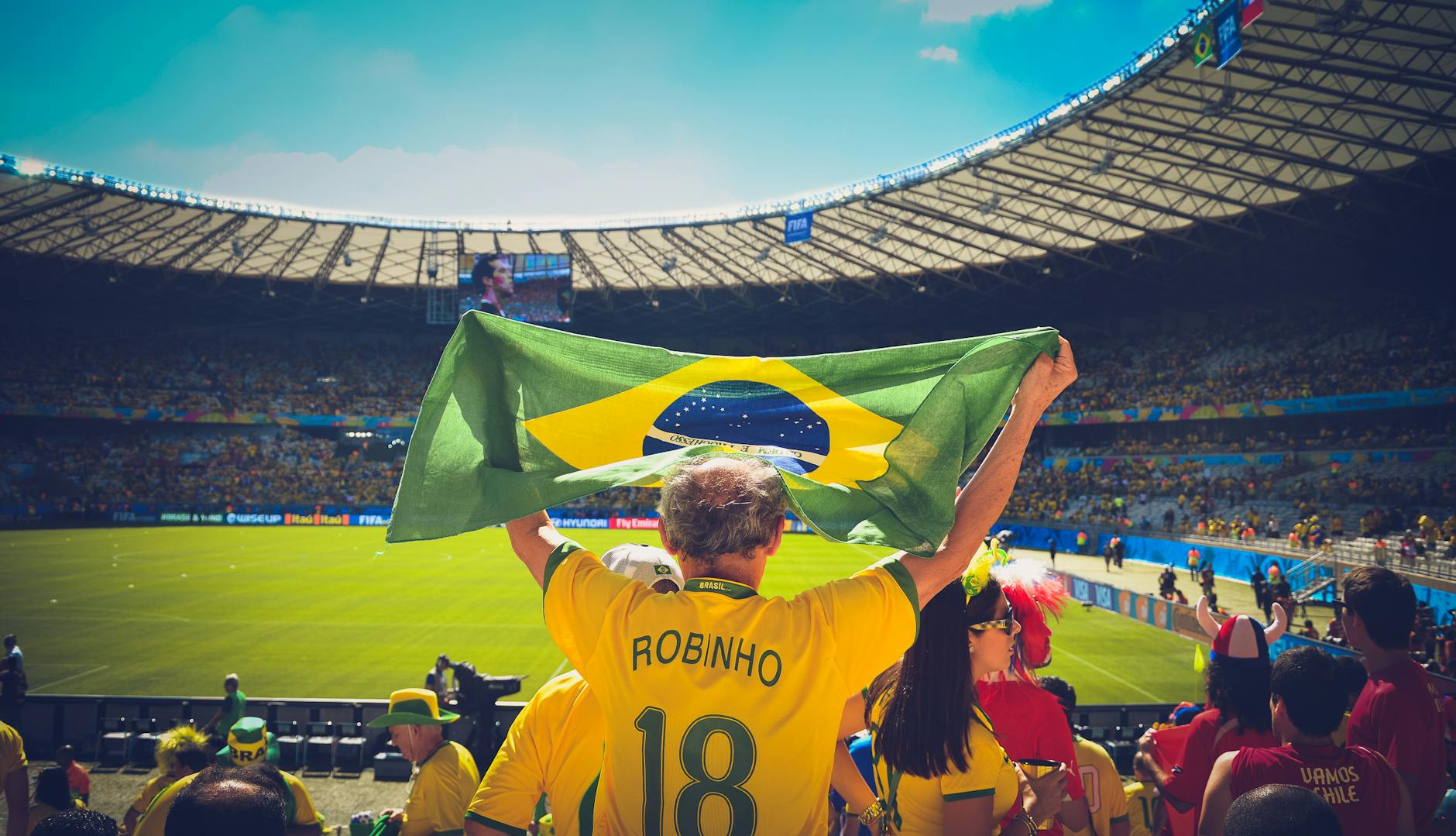
Photo by Caio on Pexels
#3 Mexico City: Best Value
Mexico City is the best-value World Cup football 2026 host city because it combines historic significance, intense football culture, and generally lower daily costs than many United States destinations. Estadio Azteca is the defining asset, but visitors must prepare for altitude, traffic, weather changes, and the physical demands of a large metropolis.
Mexico City occupies a special place in World Cup history. Estadio Azteca hosted matches during the 1970 and 1986 FIFA World Cups, including historic finals, and its return in 2026 gives the tournament a connection few venues can match. The stadium’s legacy is not just decorative: altitude can influence oxygen availability, recovery, pressing intensity, and late-match decision-making. Teams accustomed to sea-level conditions may alter their tempo, protect energy more carefully, or struggle during repeated high-intensity transitions. Supporters feel the environment too, particularly after long flights, poor hydration, or a night spent celebrating in crowded areas. A practical rule I learned after ignoring it myself: arrive early enough to sleep, hydrate steadily, and avoid treating the first evening like a final.
The value argument requires nuance. Accommodation, food, and local transport may cost less than comparable options in New York or Atlanta, but traffic can erase those savings if every journey requires a long private ride. Choose lodging near your planned activities rather than assuming the city’s central district solves everything. Use established transport options, confirm venue policies, and keep digital and physical copies of essential documents. The Mexico City government tourism portal can help with official city information, while FIFA announcements should remain the authority for stadium access and ticket rules.
Mexico City also offers the strongest atmosphere for supporters who want football woven into everyday life. Markets, historic neighborhoods, museums, street food, and local club traditions create a richer non-matchday experience than a purpose-built event district. Yet value is not the same as simplicity. Rain can arrive quickly during the summer season, traffic conditions can change without warning, and the altitude may affect visitors who assume they can maintain their normal travel pace. That is why Mexico City ranks third overall but first for supporters willing to prepare carefully.
Ready to compare match conditions, travel demands, and tactical implications?

Photo by Nano Erdozain on Pexels
How We Ranked Them
I ranked these three World Cup football 2026 host cities using six practical criteria: matchday access, stadium quality, football atmosphere, international connectivity, non-matchday value, and travel risk. The weighting deliberately favors the supporter’s real experience rather than the city’s advertising budget.
- Matchday logistics: 25% — public transport, airport links, hotel positioning, and likely journey complexity.
- Football atmosphere: 20% — local clubs, supporter culture, stadium history, and community engagement.
- Venue quality: 20% — roof protection, facilities, sightlines, capacity management, and event readiness.
- International access: 15% — direct flights, language support, and global accommodation supply.
- Value beyond tickets: 10% — food, lodging, local transport, and activities.
- Practical risk: 10% — weather, traffic, altitude, congestion, and avoidable planning problems.
Atlanta scores highest because it performs consistently across almost every category. New York/New Jersey wins on international access and final-stage significance but loses points for cost and metropolitan complexity. Mexico City wins the value and historical-atmosphere categories while losing points for altitude, traffic, and the extra preparation required from visitors who have never traveled there before.
This weighting also explains a contrarian conclusion: the most famous host city is not automatically the best base for a multi-match trip. If you value culture above convenience, New York may be your personal winner. If historic stadium identity matters most, Mexico City can outrank both American options. But for the broadest group of supporters, Atlanta’s combination of Mercedes-Benz Stadium, downtown access, MARTA, and Atlanta United FC gives it the most dependable profile.
The tournament’s expansion to 48 teams and 104 matches increases the importance of logistics. More matches mean more possible ticket combinations, more demand for accommodation, and more opportunities to create an itinerary that looks brilliant until the travel times are added. Use the [World Cup 2026 travel-planning checklist] as a working document, and calculate every transfer conservatively. The mistake is not missing one glamorous restaurant; it is missing a match because you trusted a map’s driving estimate on a busy tournament day.
[Internal Link: World Cup 2026 ticket and travel planning guide]
Which Should You Pick?
Choose Atlanta if you want the strongest all-round World Cup football 2026 experience, New York/New Jersey if global access and final-stage drama matter most, and Mexico City if historic atmosphere and lower daily costs are your priority. The correct choice depends less on the city’s headline reputation than on your match schedule, budget, tolerance for travel, and preferred supporter experience.
Use this decision guide:
- Pick Atlanta if you want a modern stadium, manageable central access, a strong domestic soccer culture, and a practical base for first-time tournament travel.
- Pick New York/New Jersey if you are flying internationally, meeting supporters from several countries, attending the final, or prioritizing cultural variety over lower costs.
- Pick Mexico City if you want World Cup history, passionate football surroundings, distinctive local food, and better value, while accepting altitude and traffic.
- Split your trip only if you have enough recovery time between matches. A cheap flight is not a bargain when it creates a missed connection, a lost hotel night, or an exhausted matchday.
One information-gain detail deserves emphasis: compare total trip cost, not headline ticket cost. For a four-day visit, add airport transfers, stadium transport, meals, local data, weather gear, and at least one contingency night. In my own tournament planning, a city with a nominally cheaper room has sometimes finished 20% more expensive after transport and late arrivals were included. That is not a universal statistic, but it is a useful budgeting test, and it catches the trap that most “best host city” lists ignore.
Coach’s Corner will cover the sporting side of the tournament as well: formation changes, pressing patterns, player availability, expected lineups, and responsible pre-match analysis. If you use predictions or odds as part of your viewing routine, set a fixed entertainment budget and never chase a loss. Football already carries enough emotional risk without adding financial recklessness to the night.
Frequently Asked Questions
Q: What is World Cup football 2026?
A: World Cup football 2026 is the FIFA men’s international tournament hosted by the United States, Canada, and Mexico from June 11 to July 19, 2026. It will feature 48 teams and 104 matches across 16 host cities, making it the largest edition under the expanded competition format. The tournament will include group-stage and knockout matches across North America, with the final scheduled at MetLife Stadium in East Rutherford, New Jersey. FIFA remains the authoritative source for confirmed fixtures, regulations, venues, and ticket information.
Q: Which city is best for World Cup football 2026?
A: Atlanta is the best overall city for World Cup football 2026 because it combines Mercedes-Benz Stadium, downtown access, MARTA transport, Hartsfield-Jackson Atlanta International Airport, and an established football culture. New York/New Jersey is stronger for international connectivity and final-stage significance, while Mexico City is better for history and value. Your personal choice should reflect the matches you want to attend, your accommodation budget, and how much travel complexity you can tolerate.
Q: How should I plan a World Cup 2026 trip?
A: Start by choosing confirmed matches, then book accommodation near reliable transport rather than simply near the city center. Check airport options, stadium entry routes, kickoff times, local weather, and the gap between consecutive fixtures before purchasing non-refundable travel. For Atlanta, compare MARTA access with walking distance to Mercedes-Benz Stadium; for New York/New Jersey, verify the exact MetLife Stadium transfer; for Mexico City, allow time to adjust to altitude and traffic.
Q: What is the difference between Atlanta and New York/New Jersey for the 2026 World Cup?
A: Atlanta offers a more compact and balanced matchday experience, while New York/New Jersey offers greater international access, cultural variety, and the prestige of hosting the final. Atlanta’s Mercedes-Benz Stadium and MARTA network can simplify movement, whereas the New York metropolitan area requires more careful neighborhood and transit planning. New York is usually the better choice for global visitors and major-stage drama; Atlanta is usually better for lower logistical stress.
Q: Is Mexico City worth visiting for World Cup football 2026?
A: Mexico City is worth visiting if you value World Cup history, passionate football culture, and potentially lower daily costs than major United States destinations. Estadio Azteca’s association with the 1970 and 1986 tournaments gives the city exceptional historical weight. Visitors should prepare for altitude, traffic, sudden weather changes, and longer travel times, especially around matchday. Arriving early, hydrating, and choosing lodging near planned activities can make the experience substantially easier.
Q: How much should I budget for a World Cup 2026 host-city trip?
A: A realistic four-day budget should include tickets, accommodation, flights, local transport, meals, data access, weather equipment, and an emergency reserve rather than relying on a room price alone. New York/New Jersey will generally require the highest accommodation and dining budget, Atlanta may offer the best balance, and Mexico City can reduce daily costs while increasing the need for careful transport planning. Prices will vary by match stage, demand, and booking date, so use official ticket channels and avoid unofficial resale promises.
Q: What should I do if World Cup 2026 travel plans fail?
A: Keep a flexible backup route, maintain printed and digital copies of travel documents, and leave several hours between flights, hotel check-in, and stadium entry. If transport fails, use official airport, transit, stadium, and FIFA communications rather than social-media rumors or unverified ticket sellers. A spare hotel night and emergency transport budget can protect an entire itinerary, especially in New York/New Jersey and Mexico City. The cheapest plan is not the safest plan when a single delay could cost you a match.
Atlanta remains my first recommendation because it gives the widest range of supporters the fewest ways to have a bad day: a major international airport, a central stadium, MARTA access, a retractable roof, and the football identity built by Atlanta United FC. New York/New Jersey is the spectacular choice, and Mexico City is the soulful one, but both demand more deliberate planning. Start with the match you cannot bear to miss, then build transport, accommodation, rest, and budget around it. That old habit of booking the cheapest room first has cost me more than I care to admit. Believe it or not — I do.
Want daily World Cup football 2026 predictions, tactical analysis, and player-stat updates from Coach’s Corner?
Thank you for reading.
Coach's Corner · Editorial Archive · No. 01